Why Matcha Prices Are Exploding in Japan Right Now
Prices checked: November 29, 2026
Walk into a famous tea shop in Kyoto today and you may find a small sign next to the matcha: one tin per customer. Marukyu Koyamaen, one of Uji's most respected producers, has limited matcha purchases at its own shops since March 2025. Ippodo, the Kyoto tea house founded in 1717, has kept purchase limits in place since October 2024. These are not marketing tricks. Behind the signs is the steepest price rise Japanese tea has ever recorded — and it starts with the leaf itself.
Start with the leaf: auction prices more than tripled
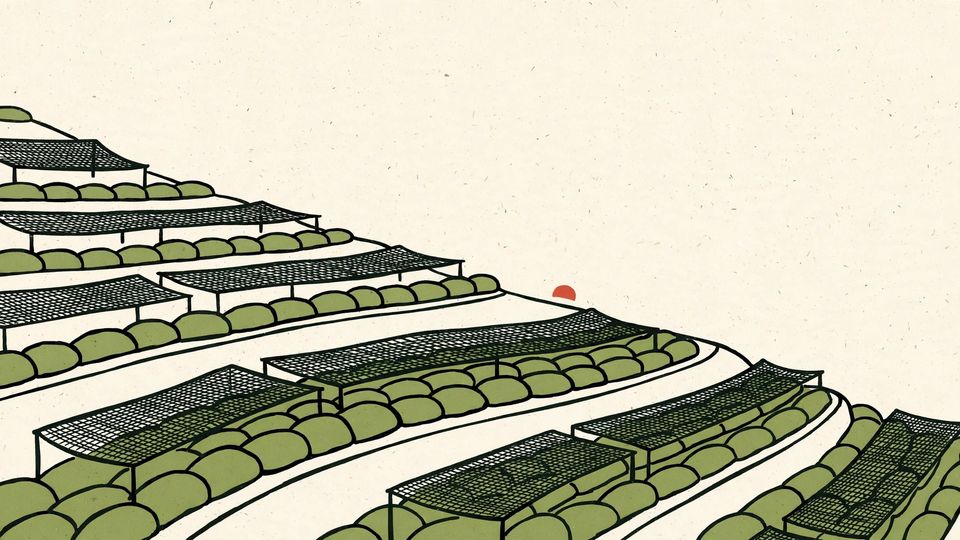
Matcha is made from tencha, tea leaves grown under shade for two to three weeks before harvest, then steamed and dried without rolling. At Kyoto's tea market, the average price of first-flush tencha tells the story in one line: ¥5,402 per kilogram in 2024, ¥14,144 in 2025, and ¥17,797 in 2026, according to Kyoto Prefecture Tea Chamber figures published by Ippodo. Four years earlier, in 2022, the same grade averaged ¥4,121.
The top of the market moved even harder. Uji tencha averaged ¥43,330 per kilogram in 2025, up 216% in a single year. When the 2026 season closed in July, the Uji market reported record totals across the board — ¥12.94 billion in trade, with average prices the highest since comparable records began in 1996. This is not a one-year spike. It is a staircase, and it is still going up.
Japan is growing more tencha than ever — and it is not enough
Here is the part most coverage misses: Japan is not running out of matcha because farmers stopped growing it. National tencha production reached 6,278 tons in 2025, roughly 3.2 times the 2014 level, according to the Ministry of Agriculture, Forestry and Fisheries (MAFF). Farmers across Kagoshima, Shizuoka and Kyoto have been converting fields to tencha as fast as they can.
Demand simply grew faster. Japan's green tea exports hit a record ¥72.1 billion in 2025, up 98.2% in one year — and powdered green tea, the category that includes matcha, accounted for about 84% of that value. The largest buyer is the United States, which took ¥29.3 billion worth, most of it powdered. Reading the data, the shortage is concentrated where it hurts most: first-flush, Uji-grown, high-grade leaf. There is more tencha than ever. There is not more top-grade tencha — and that is what everyone is bidding for.
The demand came from lattes, not tea ceremony
MAFF says it plainly in its own export report: the growth is centered on powdered tea used as an ingredient — for lattes and sweets — driven by health-conscious and Japan-curious consumers in the US, Europe and Southeast Asia. Add a second buyer standing in the same line: visitors to Japan. The Kyoto Prefecture Tea Chamber noted in its 2025 emergency report that premium matcha is being bought up in domestic tea shops by the surge of foreign tourists. The tea ceremony market did not triple in four years. The café market did.
Why supply cannot sprint
Tencha cannot be rushed. The shading period alone takes two to three weeks under purpose-built covers, and converting a sencha field requires the shading structures, a dedicated tencha factory, and suitable cultivars. Behind the equipment problem is a people problem: the number of commercial tea-farming households in Japan has fallen from 37,617 in 2005 to 7,726 in 2025, and 63% of core farm workers are now 65 or older, per MAFF census figures. Around 40% of tea fields are over 30 years old. Even the final step is slow by design — Japanese tea sellers commonly explain that a stone mill grinds only about 30 to 40 grams of matcha per hour. Every stage of this supply chain moves at walking pace, while demand arrived by jet.
What the tea houses did: ration first, then raise prices
The makers' announcements, read in order, show an industry being dragged uphill. Marukyu Koyamaen limited purchases to one matcha item per person in March 2025, raised prices roughly 1.5 to 1.6 times that July, then raised them again — another 1.2 to 1.3 times — in November, explaining that second-flush leaf prices had reached about three times their 2024 level. Ippodo's flagship Ummon no Mukashi (20g) went from ¥2,592 in October 2024 to ¥4,320 in 2025 and ¥5,400 in 2026 — more than double in two years. Ito En, Japan's largest tea company, raised 19 ceremonial-grade matcha products by 48.8% to 100% in September 2025. Rationing came first because the price rises alone were not slowing anyone down.
What this means if you buy matcha outside Japan
Overseas prices follow the same leaf, with a lag. One price tracker that follows five major matcha products sold in the US found increases of 12% to 86% between early 2023 and October 2026, with almost all of the rise landing after mid-2025 — Ippodo's Sayaka, for example, went from $35 to $50 for 40g. A November 2026 survey of US online stores put the median ceremonial matcha at about $0.95 per gram. Because the 2026 harvest traded even higher than 2025's, the increases already announced in Japan have further to travel before they finish showing up on overseas shelves.
The short version
Matcha is expensive because the world's cafés discovered it at the exact moment Japan's tea industry became least able to expand: an aging farm base, a slow and equipment-heavy production method, and a top grade that cannot be manufactured faster. Japan is planting more tencha than ever, and prices still set records in 2026. Until the new fields mature — a matter of years, not seasons — the one-tin-per-customer signs are likely to stay.
Japan Proven checks prices and claims against Japanese primary sources. When we link to shops, we may earn a commission; our affiliate disclosure explains how this site is funded.
Sources (Japanese primary sources first)
- Ministry of Agriculture, Forestry and Fisheries (MAFF), "The Situation of Tea" (茶をめぐる情勢), July & October 2026 editions — tencha production, prices, farm demographics.
- MAFF, "2025 Export Results for Agricultural, Forestry and Fishery Products and Food" (February 3, 2026, based on Ministry of Finance trade statistics) — green tea exports ¥72.09 billion, +98.2%.
- Kyoto Prefecture Tea Chamber / JA Zen-Noh Kyoto, "Emergency Report on the 2025 Kyoto New Tea Season" (June 2025) — Uji tencha ¥43,330/kg, production declines.
- Ippodo Tea, official notices on price revisions (2024, 2025, and September 2026) — Kyoto market tencha price series 2022–2026; product price history.
- Marukyu Koyamaen, official notices (March 19, 2025 purchase limits; July 1, 2025 and November 1, 2025 price revisions).
- Kyoto Shimbun (May 13, 2026) and Asahi Shimbun (July 31, 2026) — 2026 season auction results via JA Zen-Noh Kyoto.
- Ito En price revision announcement (July 31, 2025), as reported by Shokuhin Sangyo Shimbun, Reuters and Bloomberg.
- Overseas price context: Tomari, "The 2026 Matcha Shortage" price tracking (updated November 8, 2026); One with Tea US price survey (November 14, 2026).